
Agile & Scrum Frameworks: Mastering the Roles of the Product Owner, Scrum Master, and Delivery Team in Iterative Development Environments

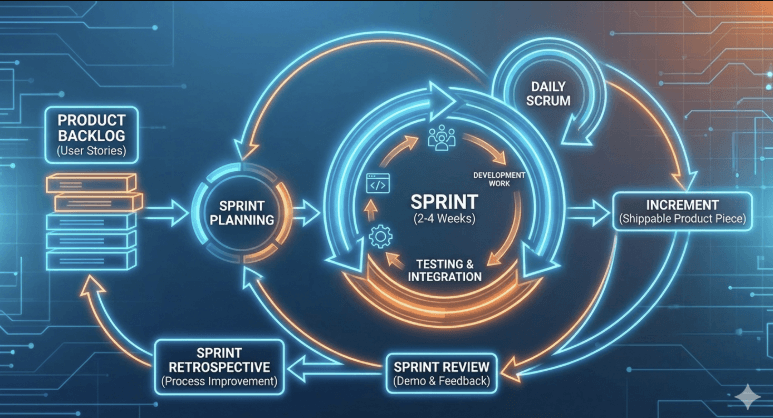
Agile development relies on short learning cycles. Teams deliver small increments, gather feedback, and adjust priorities instead of committing to a long, fixed plan. For people who work with requirements and stakeholders, Scrum role clarity is one of the most practical skills to build. Many professionals start with a business analyst course in pune to understand how analysis supports iterative delivery and how decisions flow during a Sprint.
Why Scrum Works for Iterative Development
Scrum is a lightweight framework built around Sprints, usually one to four weeks. Each Sprint should produce a usable Increment that meets the team’s Definition of Done. The real benefit is not the ceremonies. It is transparency, frequent inspection, and fast adaptation.
Scrum fits best when requirements evolve, risks are uncertain, and user feedback needs to shape the roadmap. Clear roles reduce confusion and keep the team aligned on what matters.
The Product Owner: Setting Direction and Priority
The Product Owner is accountable for maximising product value. They own the Product Backlog and decide what the team should build next. This role succeeds when it converts competing stakeholder opinions into a clear order of work.
Core responsibilities include:
- Defining a Product Goal and communicating the “why”.
- Ordering backlog items by value, risk, and urgency.
- Clarifying acceptance criteria so work is testable.
- Making trade-offs quickly when priorities change.
A strong Product Owner avoids over-specifying solutions. They describe outcomes and constraints, then let the team design the best approach. They also stay close to users through reviews, data, and direct feedback.
Backlog Readiness in Practice
Backlog items should be small enough to fit a Sprint and clear enough to estimate. If items are too large, split them by user value, workflow step, or scenario. If items are unclear, add examples and success measures rather than long documents.
The Scrum Master: Coaching the System, Not Managing People
The Scrum Master is accountable for helping the team use Scrum effectively. They are a coach and servant leader who improves collaboration and removes impediments. They do not assign tasks or act as a gatekeeper.
What this role typically does well:
- Facilitate Scrum events so they stay focused and time-boxed.
- Surface blockers early and help remove them, including organisational delays.
- Reinforce good practices such as small batches, continuous improvement, and psychological safety.
The Scrum Master’s value is visible when delivery becomes smoother. Fewer handovers, fewer last-minute surprises, and clearer working agreements are strong signals that the system is improving.
The Delivery Team: Building a Releasable Increment
In Scrum, the delivery team is cross-functional and self-managing. It includes the people needed to build and validate the Increment, such as engineers, testers, designers, data specialists, and analysts. The team decides how to do the work and is accountable for quality.
Reliable teams focus on:
- A clear Definition of Done that includes testing and review standards.
- Small slices of work so progress is visible daily.
- Early validation to reduce rework and control technical debt.
Where Business Analysis Adds Value
Business Analysts often support the Product Owner and the team by refining backlog items, mapping processes, identifying edge cases, and confirming acceptance criteria. The best analysts reduce ambiguity and speed up decisions. They focus on testable outcomes, not exhaustive documentation.
See also: Business Insights Tracker Notes About Parkifle Weniocalsi and Monitoring Feedback
How the Roles Coordinate Through Scrum Events
Scrum events keep alignment tight:
- Sprint Planning: The Product Owner proposes the highest value work and a Sprint Goal. The delivery team selects what it can complete. The Scrum Master supports realistic planning.
- Daily Scrum: The delivery team coordinates and flags blockers. The Product Owner stays available for clarifications.
- Sprint Review and Retrospective: The team collects feedback on the Increment, updates the backlog, and chooses improvements for the next Sprint.
Common Pitfalls and Simple Safeguards
Scrum struggles when accountability is unclear. Examples include a Product Owner who cannot make priority calls, a Scrum Master who only schedules meetings, or a team that waits for detailed instructions.
Safeguards that work:
- Ensure one person owns backlog order and scope decisions.
- Keep work small and measurable, with acceptance criteria and a Definition of Done.
- Apply one or two improvements from each retrospective, then check the results.
Conclusion: Role Clarity Creates Predictable Delivery
Scrum is effective because it combines clear accountabilities with frequent feedback. The Product Owner drives value and priority. The Scrum Master improves the environment and removes impediments. The delivery team delivers a releasable Increment each Sprint. If you are strengthening these skills through a business analyst course in pune, focus on backlog clarity, role boundaries, and the discipline of inspecting and adapting every Sprint.